


Discover more
During the post-war years, as motorsport developed across Europe, fans could expect to see the stars of the day in everything from Formula 1 to sportscars, touring cars, rallying and even hillclimbs.
For drivers like Sir Stirling Moss and Jim Clark, jumping from one type of motor racing to another was not just a fact of life, it was the best way of paying the bills, as start and prize money back then was much more lucrative then their standard ‘retainer’.
The introduction of commercial sponsorship, especially from tobacco and oil companies, in the late 1960s changed all of this and brought along the advent of a more ‘professional’ era in the sport. These days it’s rare to see superstar drivers in anything other than the F1 car they race 20-odd times a year.
Current world champion Lewis Hamilton, for example, has only ever raced a Tatuus Formula Renault car, Dallara F3 and GP2 cars and the F1 racers that McLaren and Mercedes have prepared for him. Moss would often race a more varied selection of cars in a month!
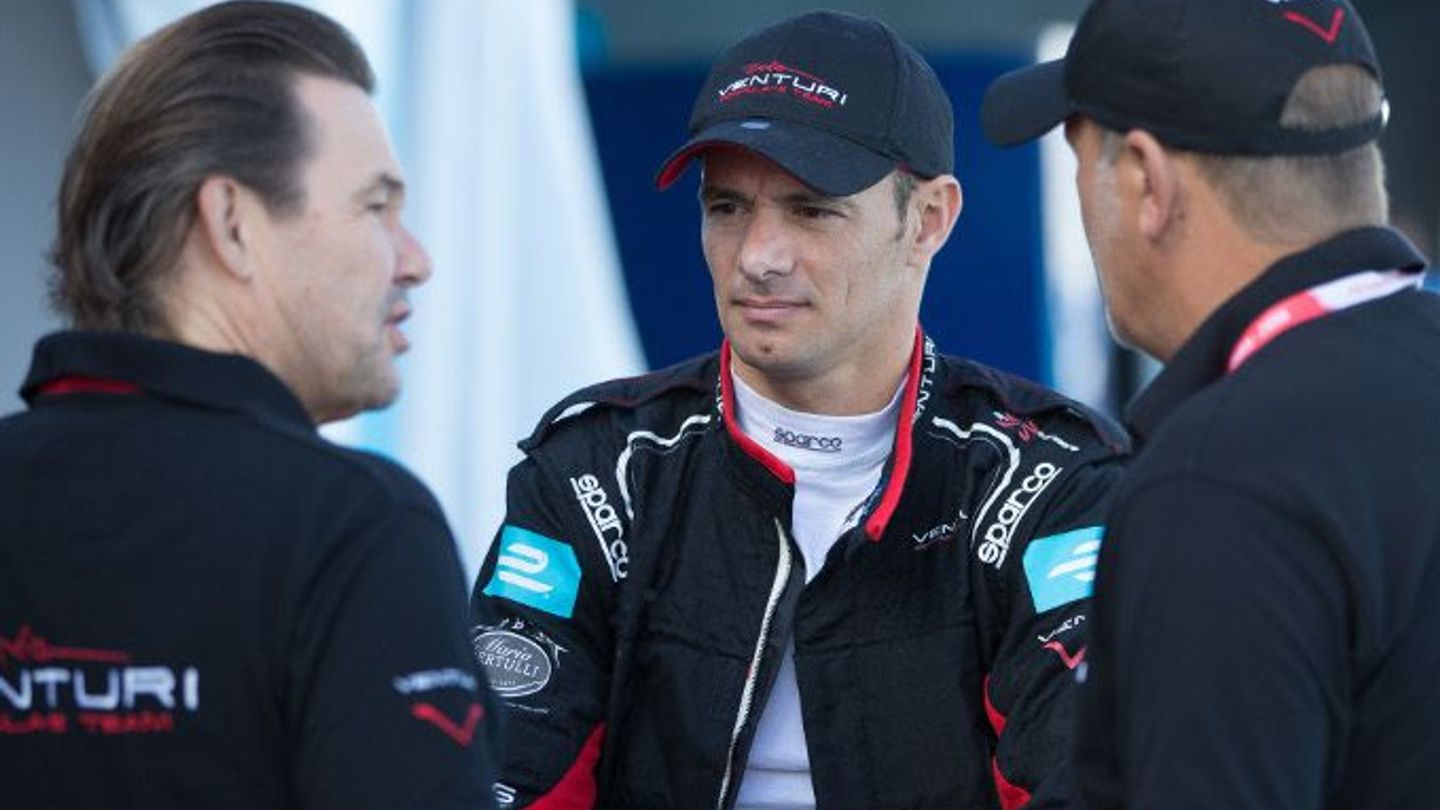
Things are slightly different in Formula E. As a winter championship, the calendar schedule gives drivers the opportunity to race in other forms of motorsport. And there is one driver who takes this to the extreme. Step forward Stephane Sarrazin.
As well as being a key member of Venturi’s Formula E team, Sarrazin is also part of Toyota’s World Endurance Championship line-up. On top of this, when he has time he also competes in his own S2000-spec rally car, in which he’s equally adept.
Although Sarrazin didn’t start to compete on the stages on a professional basis until the early 2000s, his rallying career could have started much earlier had he failed to secure a Formula Renault scholarship by winning the Volant Elf academy series as a teenager.
“My father was a rally driver, not professional, but he was a rally driver,” Sarrazin recalls, “and where we live in the south of France the rally is very famous. The Rallye des Cevennes is one of the most famous French rallies. My father had an Alpine, an Opel Kadett, Renault 5 turbo. He had some good results. But when I started in go karts, he stopped rallying. When I was 18 I did the Volant Elf. At this time Renault became interested because I did some rallies when I was young - one rally per year - and it was going well with the Renault Clio. So it was a choice of racing, if I was winning the Elf season, or rally if I was not. And I won. So I started in Formula Renault.”
After enjoying some success during his debut season, Sarrazin romped to the French Formula Renault title in year two, scoring five wins, 11 podiums and almost double the points of his nearest challenger. This led to a graduation to the French Formula 3 series where he spent three seasons racing against the likes of ex-Formula E drivers Oriol Servia and Franck Montagny.
For 1998 he moved to the highly competitive Formula 3000 series, and won on his debut at Oschersleben for the Apomatox team. He was on the podium again in Hungary where he finished second to future Venturi Formula E team-mate Nick Heidfeld and took sixth in the final standings. Sarrazin became part of the Gauloises junior team in 1999, which was linked to Alain Prost’s eponymous F1 outfit.
This led to him conducting a series of tests for the F1 team and when Minardi’s Luca Badoer was injured in a testing crash, he was given the opportunity to make his race debut in the Brazilian GP. Although his race ended in a spectacular high-speed accident caused by a stuck throttle, Sarrazin had shown well. In qualifying he was 0.7s faster than team-mate Marc Gene, while despite his early exit from the race, his fastest lap was half a second better than the Spaniard, who came home ninth.
“I was a reserve driver for Prost and suddenly Minardi called for a drive and I accepted, of course!” he says. “And after Brazil they asked me to do the whole season and to sign immediately. They called many times, Mr Minardi. Mr Rumi [the owner of Fondmetal, co-owner of the team] called many times and Prost said, ‘No, no, you don’t drive with them. Next year you are with me’. That was my mistake, I think the mistake of my career.
“But at this time I was friends with Alain and for me he was a bit like a god! He was four-time world champion so to drive for him was an honour. So I followed Alain, but the year after I was second in the championship behind Nick in Formula 3000 and he said, ‘Sorry, I cannot take you, I have to take Nick for Mercedes engines for the year after’. I was completely out. But it’s a part of the game. If I was with a strong manager maybe he would have said, ‘Alain, we go to Minardi and after we speak about next year.’”
With no F1 seat, Sarrazin remained a test driver for Prost and spent two further seasons in F3000. During this time he also returned to the rally stages and made his debut at the Le Mans 24 Hours at the wheel of a Dodge Viper. When Toyota entered F1 in 2002 it appointed Sarrazin as its test driver. However, once again the possibility of an F1 seat was denied to him.
“I was doing the tests and everything was going very well and it was a political issue with one guy. So I prefer not to speak about it…”
For 2003, Sarrazin combined a season racing in the Spanish-based World Series by Nissan championship with a sportscar programme with Pescarolo, which included a win at Estoril partnering Jean-Christoph Boullion. With single-seater opportunities thin on the ground, Sarrazin returned to his roots in 2004 and secured a ride in a Subaru in the French Rally Championship. Remarkably he won the series and was rewarded with some drives in the Prodrive-run World Rally Championship programme.
“I was with thinking I have to try in my career with rallying and I signed with Subaru,” he states. “I was in competition with many drivers, but I won a season with Subaru and I did a very good one. I was French championand had three rallies in the world championship. I finished sixth and fourth in Germany and Corsica. Subaru chose to re-sign me so I did a full season with them and David Richards in 2005.”
Being part of the Prodrive empire led to an unexpected return to the track, when he was asked to be part of the Aston Martin GT1 line-up for the classic Sebring 12 Hours endurance race. Sarrazin showed well and became part of the Aston programme alongside his rallying commitments for the next two seasons.
This was a great era in GT racing, with Aston and Corvette staging some epic duels. Sarrazin was a key member of the team and when Peugeot announced that it was returning to sportscars car racing for 2007, Sarrazin was an obvious candidate for the French manufacturer. Peugeot also had a rally programme, which meant Sarrazin could keep his eye in there, while also competing in GT races in the awesome Maserati MC12.
Together with Pedro Lamy, Sarrazin was the Le Mans Series champion in 2007. He was on pole position for Le Mans, but lost out in the race to the more consistent Audi. It would become something of a theme, not just with Peugeot, but also Toyota, whom he joined in 2012.
“I can say many times I had the car to win,” he laments. “Last year, we were leading with Kazuki Nakajima and Alex Wurz, and after 16 hours our car sensor set on fire. With Peugeot also, I led the race many times but my best result is second - three times! Winning is still my dream. It’s an amazing race. I think I could’ve won four times for sure, but it’s part of the race.”
While Le Mans success proved elusive, Sarrazin racked up the wins and claimed the 2010 Le Mans Series title for Peugeot. When Peugeot dramatically quit at the end of 2012, Sarrazin returned to Toyota, who were not only joining the World Endurance Championship, but were also considering a return to world rallying. Sarrazin could not only race, he could help develop the rally car too.
Although he was at the wheel of his privately-owned Ford Fiesta, Sarrazin achieved the finest result of his rally career in 2014 when he triumphed on the iconic Tour de Corse - a grueling test around the twisty roads of Corsica. He followed this up with another top-10 finish a year later, despite his car’s increasing venerability.
“Last year I did the world championship round with my car still from 2012,” he says. “I did the third fastest time on a 40-kilometre stage. On some stages I was very close to [World Champion Sebastien] Ogier with my car four years old! Fighting with these guys was great and I finished seventh I think.”
Despite having been away from the cockpit of a single-seater for more than a decade, at the end of 2013 Sarrazin was approached by the Venturi team about a possible drive in the new, all-electric Formula E Championship. It wasn’t something he was actively courting, but it was an opportunity he was keen to get involved in.
“When Gildo [Gildo Pallanca Pastor, owner of Venturi] called me in December before first the season I was only looking at Formula E in Auto Hebdo. I was thinking it could be good, but not for me. There was no opportunity, but when he called me I said ‘OK!’ It’s a good challenge. I was especially excited to work with a new generation of cars and also for the street tracks. I like Macau and Pau a lot, so I was thinking it would be very good for me.”
The relative lack of downforce and the treaded Michelin tyres means that Formula E cars slide around a lot more than a regular single-seater. Given his experience of rallying on loose surfaces, this is something that Sarrazin thinks plays to his advantage. However, while his pace has generally been strong in Formula E, the results have not.
“If you take every single race of season one it’s amazing,” he reckons. “We calculated the points we could have had without issues and we could’ve finished fifth in the championship! In Punta I crashed. I made a mistake as I was speaking with my engineer and hit the chicane. It was my mistake, my only one of the season. But all the time, in Monaco… in Miami... in Miami I was running fourth, I came into the pits and the other car had the engine cover open! Almost in every race there was an issue. In Putrajaya I was in front of Lucas di Grassi and Sebastien Buemi when at the exit of the hairpin the car went into neutral! I stopped and they finished on the podium…”
But the biggest missed opportunity came in the season one finale. The changeable weather played its part, but Sarrazin did well to secure pole position and was running strongly at the head of the field although he was coming under increasing pressure from Virgin Racing’s Sam Bird…
“In the first car we managed the energy well,” says Sarrazin as he takes up the story, “in the second car it was the same, then I hit a bump and my switch moved and it was not giving correct information. But my team had the information and they were saying ‘ok, we have a strategy’. So they said at one point you can push now without lifting because I had Bird behind me, so I push, push, push.
“It was easy. And then suddenly, at the last chicane the engineer said ‘stop, stop! Don’t push anymore.’ So I checked my battery temperature because I knew from Saturday to Sunday they changed the battery temperature limitation to prepare for this season. And I was thinking immediately, ‘ok it’s reading the older temperature’ so I continued to push because I was thinking it’s wrong. My economy number was good but I finished with 28.3 or something. I could’ve saved and finished second, it was easy.”
Instead of an easy second, Sarrazin’s post-race penalty for exceeding the energy usage dropped him out of the points. This season Venturi became a constructor in its own right, but Sarrazin’s bad luck has persisted. A great qualifying effort put him second on the grid for the Putrajaya ePrix, but before he could even take his place on the grid the gremlins struck.
“In the opening two races I had two issues,” he reveals. “In the first race in Beijing the mechanics made a mistake and they lost 14 seconds in the pits. So I went from fighting with Duval for P4/P5. In the second race, I qualified in P2 and total sensor failure was the issue. I went in the pitlane and it was debugged and I went again.”
His charge from the pitlane to P4 thrilled the fans and for the first time he won the public vote and received FanBoost for the subsequent Punta del Este race. After lining up a disappointing 13th, he worked his way up to ninth at the finish to keep his 100 per cent scoring record in season two going.
While Sarrazin has yet to get the result his performances have merited the team value his input and experience. At a time when racing drivers are getting to the highest level younger than ever before the value of experience has become under-rated. But don’t be surprised when a trouble-free weekend allows Sarrazin to show the young guard a thing or two.