


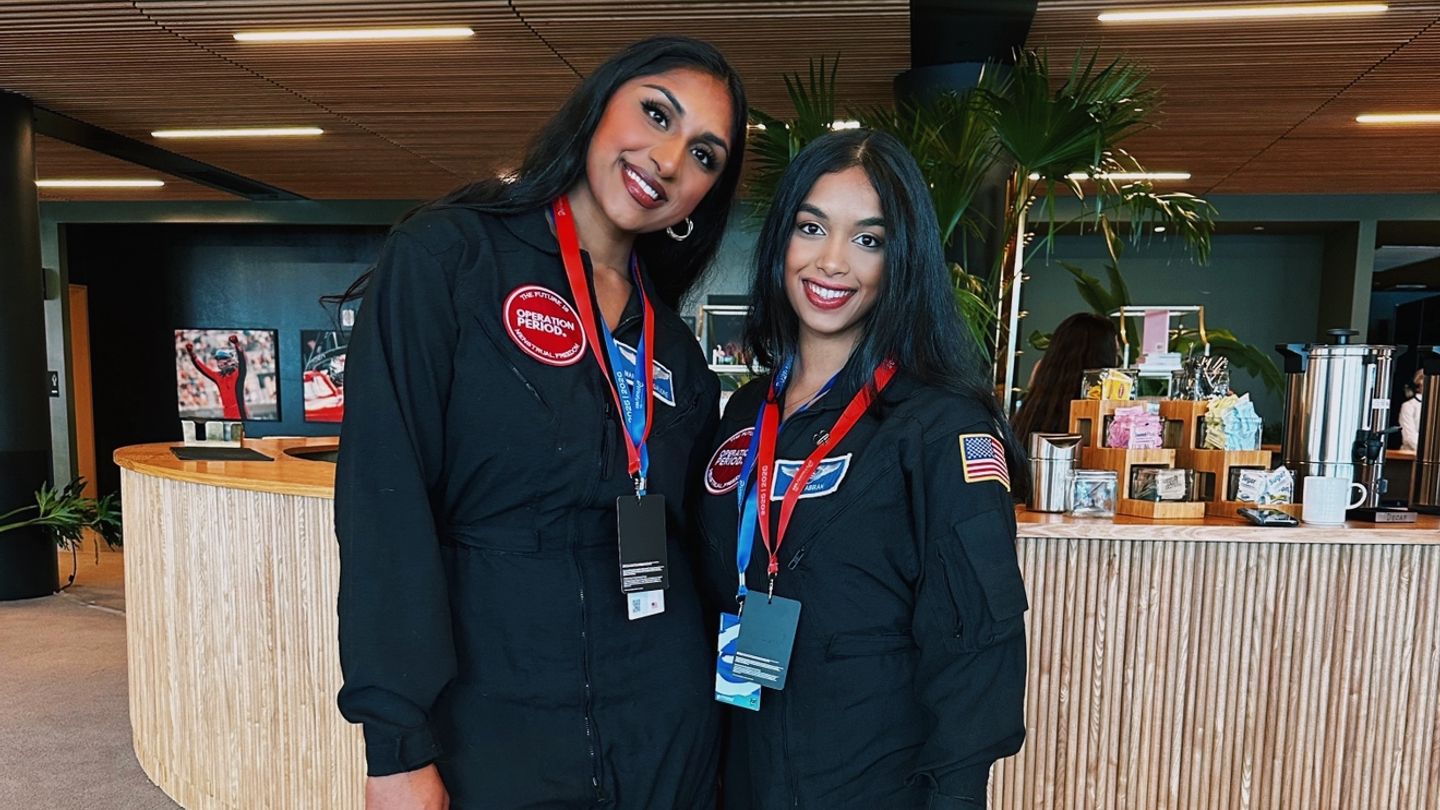
Operation Period is a nonprofit organisation dedicated to creating menstrual freedom and advancing the lives of menstruators around the world. So far, they’ve distributed over 300,000 menstrual products to those in need and delivered health education to thousands.
Their latest project, launched in 2025, is called ‘Redshift Lab’ and aims to to study menstruation on and off Earth. You’ve read that correctly, their goal is to take their research into space, where they hope to improve the lives of women in aerospace and in human spaceflight, but also apply their learnings to help menstruators on Earth.
At the heart of this mission are two incredible women, Priya Abiram and Manju Bangalore, both engineers and astronauts-in-training - true trailblazers in the STEM field. Having met whilst in astronaut training, the two quickly became best friends, and they now stand united in their aim to rectify the underfunded and under researched nature of women’s menstrual health.
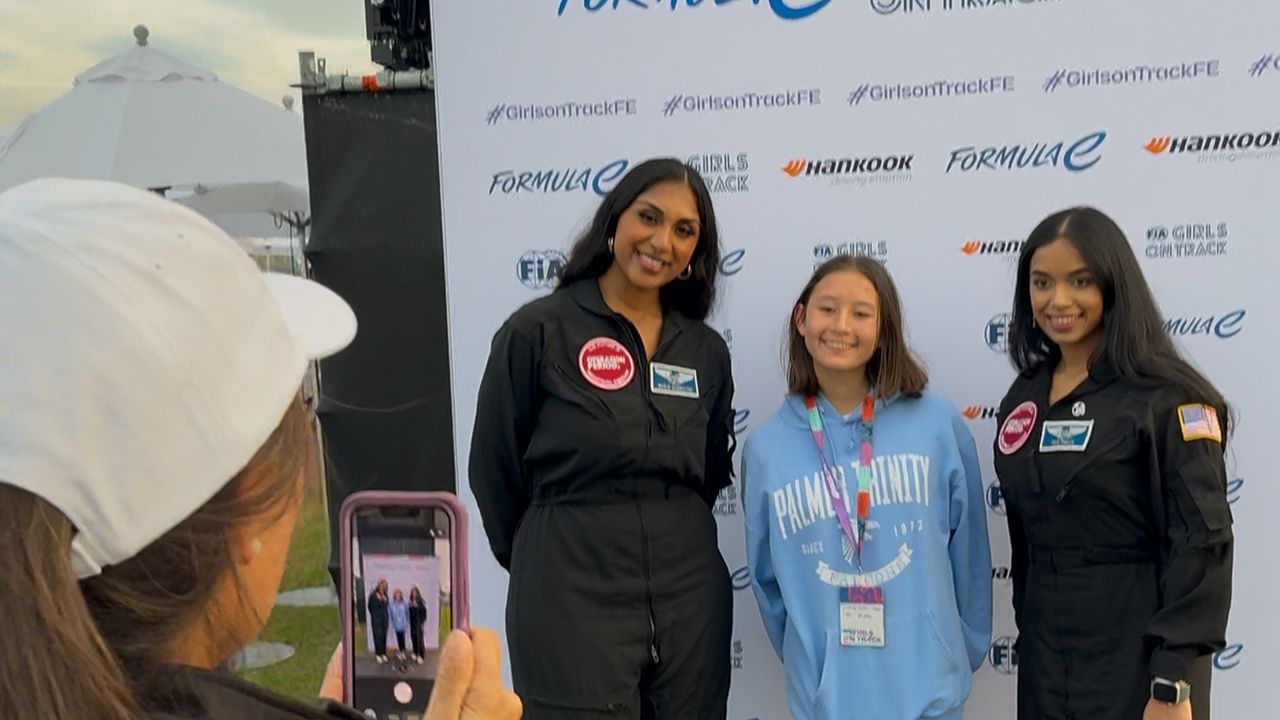
“Menstruation has been taboo for so long,” Manju states. “People feel like it's a very difficult thing to go through, which it is, but they also feel like it's very difficult to talk about and access education on this topic. Right now, on any given day, 800 million people are on their period and of those, 500 million don't have access to menstrual products, health education, or sanitation facilities.
“It really is important that we address this issue now because there are girls around the world that are losing their lives because of menstrual disorders and lack of healthcare access as a whole, and then also the stigma. People have lost their lives because of the stigma and because of the shame that comes with periods. I really think that this is a life-or-death issue that needs to be addressed now.”
To address this ‘life-or-death issue’, Manju, Priya and the Redshift Lab team have designed the world's first robotic reproductive tract simulator, a device they hope will alter and advance our understanding of menstruation in the most extreme conditions, such as space.
“For our space research in particular,” Manju explains. “We'll be able to look at this in a quantitative way and figure out ideally engineering requirements and mission planning requirements to be able to assess what products people need, how many products they need, as well as if there's anomalies like retrograde flow that could happen.”
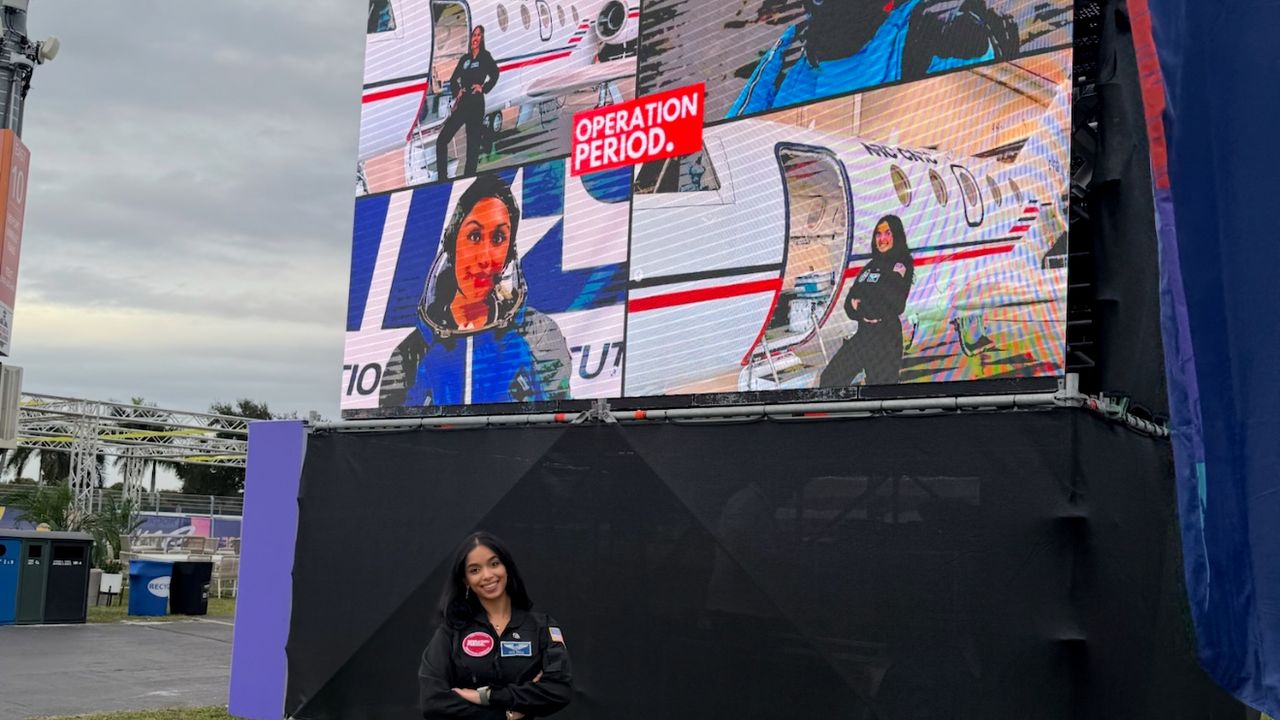
And with space travel back at the forefront of online, due to upcoming planned launches, Operation Period believes that now is the perfect time for this research to take flight.
“This year or next year, Artemis is sending the first woman to the moon,” Priya says. “Which is incredible, and has been long overdue, and a lot of female astronauts that have gone to space have often had experiences where they would have to do certain protocols such as suppress their menstrual cycle and take contraceptives that would drastically increase their risk of getting blood clots, strokes, cardiovascular diseases, drastically affecting their safety and ability to be in space long-term.
“Historically, in the space industry, we’ve designed engineering systems around the demographic of the Apollo astronauts, which were all men from the military. However, we’ve sent over 100 women to space, to date, and so with that change, it’s time to start studying the safety and the systems to equip everyone.”
But it’s not just about space. The research that the Redshift Lab team are conducting will create real world solutions and support for athletes and racing drivers who persistently push their bodies to the limit - as well as those living in extreme conditions where modern healthcare might not be easily attainable.
“Studying menstruation in extreme cases, and I say extreme meaning in edge cases like for astronauts, for racing drivers, for athletes,” Priya says. “Studying menstruation in situations where women physically exert themselves a lot is extremely important. Because when you figure out innovations and solutions and technologies to help mitigate that or to help support what they’re going through, it helps improve innovation and efficiency and sustainability for the day-to-day.
“It's really important to consider and design for these edge cases. It’s important to design for marginalised people, it's important to design for people in extreme environments, because technology and innovation in those situations results in sustainability and efficiency for everyone daily. We all benefit.”
Find out more
UNMISSABLE: Watch the brand-new season of 'Driver' on Amazon Prime
CALENDAR: Here's every race set for the 2025/26 Formula E season
FOLLOW: Download the Formula E App on iOS or Android
TICKETS: Secure your grandstand seats and buy Formula E race tickets
HIGHLIGHTS: Catch up with every race from Formula E IN FULL
HOSPITALITY: Experience Formula E and world-class motorsport as a VIP